1. Regional Microclimate Dynamics & Severe Storm Exposure in Pittsburgh
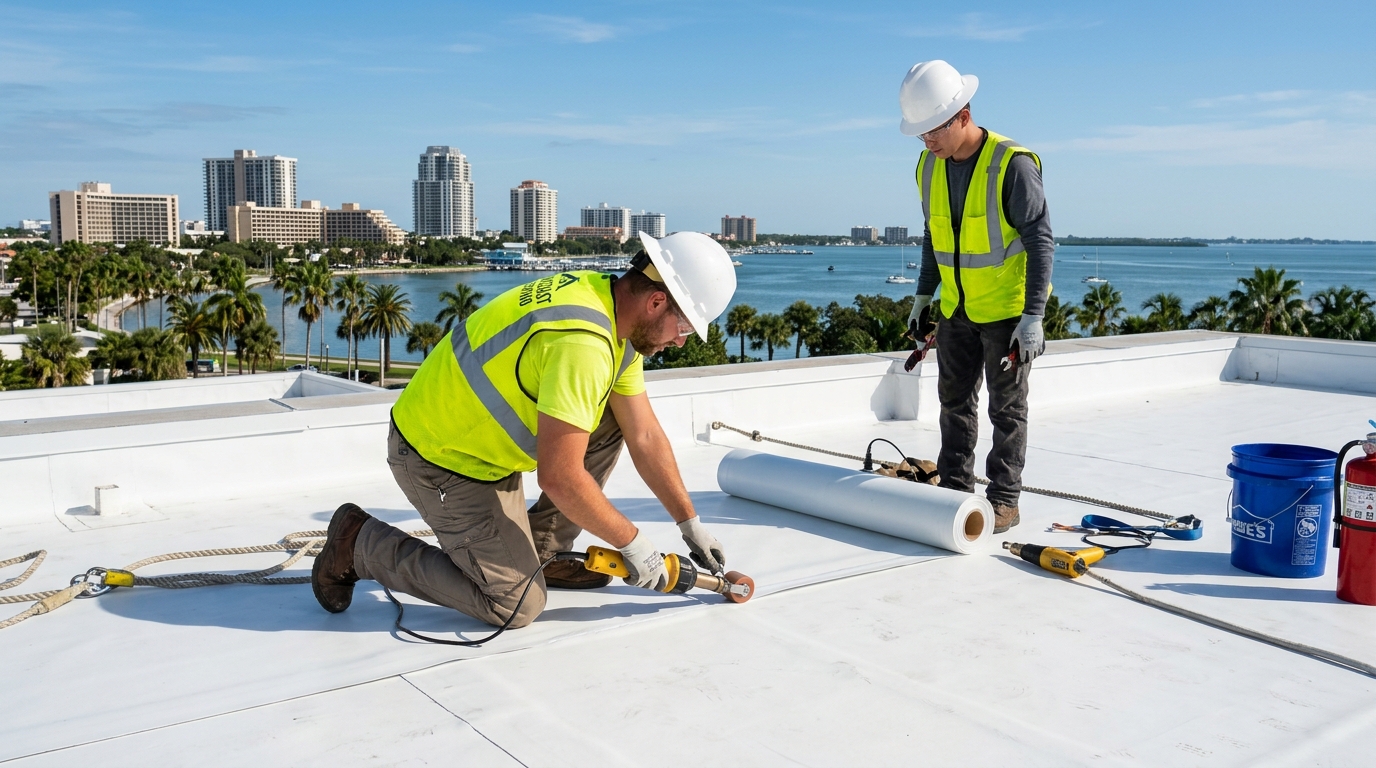
Low-slope and flat roof assemblies—commonly found on Pittsburgh commercial storefronts, rowhouse rear additions, modern residences, and industrial warehouses in the Strip District and South Side—face unique hydraulic challenges. Unlike pitched roofs that rely on gravity shedding, flat roofs must maintain positive drainage slopes (minimum 1/4 inch per foot). Over decades, building foundation settlement, structural rafter deflection, and clogged internal scuppers lead to 'ponding water'—standing water that remains on the roof surface longer than 48 hours following precipitation.
Key Pittsburgh Weather Stressors & Engineering Dynamics:
- Freeze-Thaw Cycling: Rapid temperature fluctuations cause thermal shock and seal degradation across architectural asphalt and natural slate.
- Lake-Effect Snow Accumulation: Excessive dead loads ranging up to 35 lbs/sq ft push aged valleys, rafters, and deck planks to structural capacity.
- Wind Uplift Dynamics: Channeled Three Rivers valley winds lift asphalt shingle tabs and fracture unbonded slate courses along steep gables.