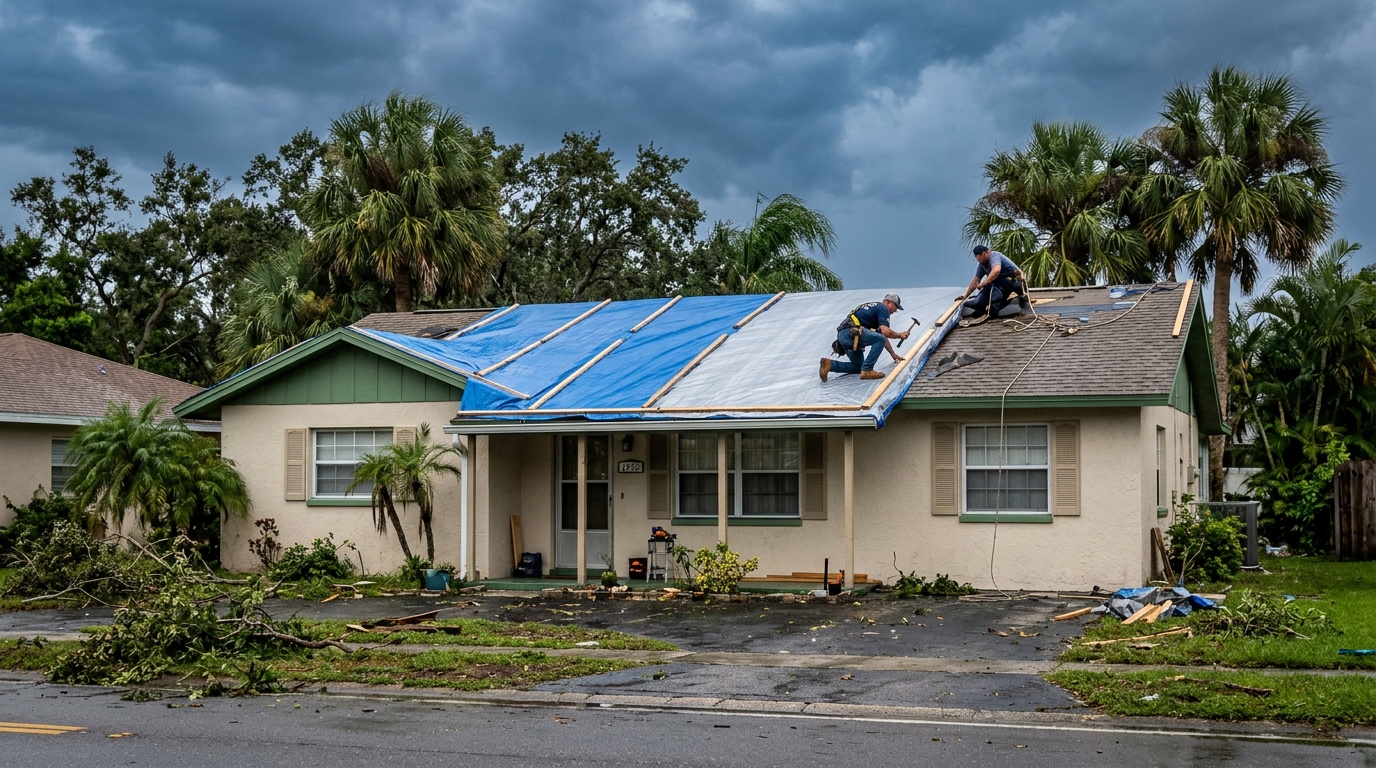
STORM DAMAGE MITIGATION & WEATHERPROOF ENVELOPE TRIAGE

Emergency Roof Tarping & Severe Storm Envelope Protection in Pittsburgh, PA

Immediate 24/7 emergency dispatch connecting property owners across Greater Pittsburgh with independent roofing crews equipped for rapid heavy-duty roof tarping, storm membrane shrink-wrapping, and fallen tree roof containment.

1. Regional Microclimate Dynamics & Severe Storm Exposure in Pittsburgh

Severe weather events in Western Pennsylvania—including Atlantic Nor'easter peripheries, polar vortex freeze-thaw cycles, and summer microbursts—frequently cause catastrophic damage to residential and commercial roofing envelopes. Sustained winds exceeding 60 mph tear architectural shingles from their adhesive nail lines, lift ridge caps, and topple heavy tree branches onto structural roof trusses. When an impact puncture or extensive shingle blow-off occurs, immediate weatherproofing tarp installation is essential to arrest cascading water damage, prevent mold colonization, and protect valuable interior furnishings.

Key Pittsburgh Weather Stressors & Engineering Dynamics:

  • Freeze-Thaw Cycling: Rapid temperature fluctuations cause thermal shock and seal degradation across architectural asphalt and natural slate.
  • Lake-Effect Snow Accumulation: Excessive dead loads ranging up to 35 lbs/sq ft push aged valleys, rafters, and deck planks to structural capacity.
  • Wind Uplift Dynamics: Channeled Three Rivers valley winds lift asphalt shingle tabs and fracture unbonded slate courses along steep gables.

2. Non-Destructive Moisture Diagnostics & FLIR Thermal Tracing

Forensic inspection prior to tarp deployment is critical to ensure worker safety and effective envelope sealing. Dispatched technicians evaluate structural truss deflection, identify compromised rafter spans beneath puncture points, and map the full perimeter of shingle uplift using non-destructive moisture meters. Technicians locate rafter centerlines through existing decking to establish structural anchor points, ensuring that tie-down anchors do not pull out under severe aerodynamic uplift.

Diagnostic Assessment Procedures:

  • Infrared Thermal Mapping: Identifying subsurface water pathways behind plaster, lathe, and drywall ceilings through evaporative cooling differentials.
  • Pinless Moisture Calibration: Measuring percentage saturation in structural plywood, oriented strand board (OSB), and tongue-and-groove decking.
  • Attic Inspection Protocol: Tracing daylight penetration and thermal bypass leaks along masonry chimneys, valleys, and plumbing vent boots.

3. Step-by-Step Substrate Restoration Methodology

Professional emergency tarping requires specialized engineering standards that far exceed basic DIY methods. Crews deploy commercial-grade 10-mil to 12-mil woven polyethylene tarps with heavy UV stabilizers. Tarps are drawn taut across the ridge line whenever feasible to prevent wind catch. Edges and seams are secured using 2x2 or 1x3 kiln-dried lumber batten strips. Batten strips are wrapped completely into the tarp edges (sandwich wrap) before being fastened with galvanized ring-shank nails or structural screws directly into rafter members. Valleys and hips receive contoured membrane blankets, ensuring water flows freely over the tarp without pooling.

Standard Operational Execution Standards:

  • Immediate Water Relief: Installing containment reservoirs and controlled plaster relief punctures to prevent ceiling collapse under trapped water weight.
  • Low-Pressure Steam Mitigation: Safely carving ice dam drainage channels using 290°F vapor steam without mechanical shingle or slate damage.
  • Structural Envelope Sealing: Fastening reinforced UV-resistant membranes and wood furring strips securely into structural rafter centers.

4. State Energy Codes & Pennsylvania Contractor Licensing Compliance

Dispatched independent contractors operate in full compliance with Pennsylvania HICPA regulations, providing clear written estimates for emergency mitigation that comply with major homeowner insurance carrier guidelines. In Allegheny County and surrounding municipalities, emergency temporary tarping does not typically require an immediate building permit, allowing crews to deploy within hours of storm clearance, while permanent structural deck repairs are coordinated through local PLI permit channels.

Regulatory Compliance Benchmarks:

  • PA HICPA Registration: Dispatched independent contractors maintain valid Pennsylvania Home Improvement Consumer Protection Act registrations with the Attorney General.
  • City of Pittsburgh PLI Codes: Full compliance with 2018 International Residential Code (IRC) Section R905 regarding ice barrier protection and permit standards.
  • OSHA Fall Protection Standards: Mandatory safety harness and tie-off procedures on steep-pitch Pittsburgh roof slopes exceeding 6/12 pitch.

5. Preventative Property Maintenance & Winter Storm Preparedness

Homeowners must understand that emergency roof tarping is an interim protective barrier designed to safeguard the structure for 30 to 90 days while insurance adjusters assess losses and roofing materials are procured. Property owners should inspect tarp tie-downs following subsequent wind events and avoid climbing onto slick tarp surfaces. Coordinating prompt permanent repairs with a licensed roofing contractor ensures full warranty restoration and long-term building envelope integrity.

Homeowner Maintenance Action Items:

  • Attic Ventilation Balancing: Maintaining a continuous 1:150 soffit-to-ridge net free air ratio to preserve cold roof decks and prevent melting.
  • Thermal Bypass Air Sealing: Caulking and insulating attic hatchways, soil stacks, chimney chases, and ceiling can lights with expanding foam.
  • Gutter & Conductor Clearing: Removing autumnal debris prior to winter freeze-up to ensure clear flow through downspout conductor heads.

Frequently Asked Questions About Emergency Roof Tarping & Post-Storm Shrink Wrap Pittsburgh PA

What are the earliest warning signs of hidden moisture intrusion beneath roofing surfaces?
Early indicators include subtle discoloration rings along ceiling drywall, musty odors emanating from upper-story closets, peeling paint along window head casings, and frost accumulation on the underside of roof sheathing in the attic during winter. In cold months, heavy icicles paired with dark melted snow patches on the roof slope signal significant heat loss and imminent moisture bypass.
How quickly can an emergency roofing crew respond to an active water emergency in Allegheny County?
When you call our 24/7 central dispatch desk at (888) 208-4155, coordinators immediately triage your location, roof pitch, and structural leak severity. We prioritize severe structural breaches and rapidly route the nearest available independent contractor equipped with emergency tarping membranes, furring strips, and diagnostic gear directly to your property.
Are dispatched roofing contractors licensed and insured in Pennsylvania?
Yes. All independent roofing contractors in our referral network are required to hold active Pennsylvania Home Improvement Contractor (PA HIC) registrations with the Office of Attorney General and maintain comprehensive general liability and workers' compensation coverage in compliance with Commonwealth statutes.
Does homeowner insurance cover this emergency repair service?
Most standard homeowner insurance policies cover sudden and accidental storm damage, wind blow-offs, falling tree limbs, and resultant emergency tarping required to mitigate secondary loss. Dispatched contractors provide comprehensive photographic proof, line-item moisture mapping, and insurance-ready invoices to expedite claim reimbursement.
What immediate steps should a homeowner take while waiting for the roofing crew?
Position deep buckets beneath active drips, pierce any sagging drywall paint blisters with a pencil to release trapped water safely, move electronics and rugs away from the perimeter, and shut off power to rooms with wet electrical ceiling fixtures. Never venture onto an icy, steep, or storm-damaged roof yourself.

Need Immediate Roofing Assistance in Greater Pittsburgh?

Our 24/7 central telephone dispatch desk connects you with qualified independent emergency roofing crews equipped to handle active leaks, ice dams, storm damage, and emergency tarping.

CALL DISPATCH: (888) 208-4155